Between persecution and resilience — interview with Jasmin Doğu, researcher at Ruhr University Bochum in Germany.
By Domenico Nocerino e Martina Biral
For centuries, the Yazidi community has lived between tradition and marginalization, mainly in northern Iraq. Their history, often overlooked, has been marked by repeated persecution, culminating in the 2014 genocide carried out by ISIS. Despite the violence endured, Yazidis continue to strive for recognition, justice, and the preservation of their cultural and religious identity.
Interview with Jasmin Doğu, a German researcher of Yazidi origin at Ruhr University Bochum in Germany, specializing in minority rights.
Interview
To begin, could you explain who the Yazidis are, what the main characteristics of their religion are, and where they primarily live
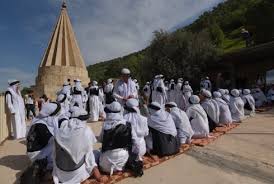
«The Yazidis are an ethno-religious minority whose origins lie in Turkey, Iraq, Iran and Syria. As a result of repeated displacement and persecution over the past decades and centuries, the Yazidis are now scattered across the globe. The majority live in Europe. Germany, in particular, has become the largest new home for the Yazidi diaspora. The Yazidis practise a monotheistic religion. This means that they believe in a single God. Their roots go back 4,000 years. Some experts claim that it is one of the oldest religions in the world. Their holy site/temple is located in northern Iraq in the Sinjar region, specifically at Lalish. There are further temples in Iraq and also in Armenia, Georgia, Syria and Turkey, amongst other places. One of the most important features is the mystical and sacred peacock angel Tausi Melek. He is regarded as God’s representative on earth. Unfortunately, there are prejudices on the part of radical Islamists.
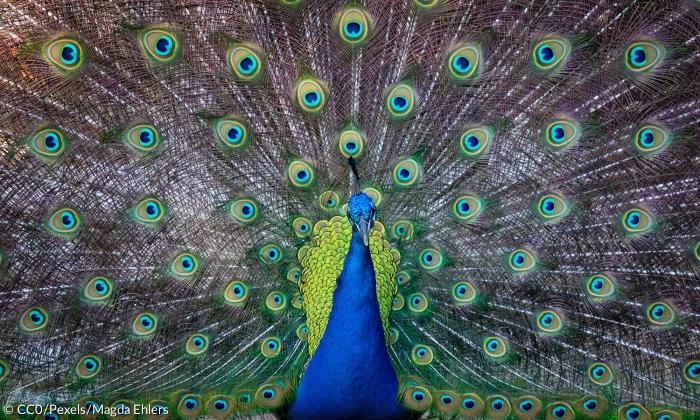
They claim that the Yazidis are devil worshippers. This is, of course, false and stems from misunderstandings about the nature of this angel. One cannot convert to the Yazidi faith. One is born a Yazidi if both parents are Yazidis. The Yazidis practise endogamy. This is because they have been a persecuted minority for centuries. Having survived 74 genocides, for reasons of protection and safety, as well as to preserve their ethno-religion, marriage is permitted only within their own religious community. The Yazidis have three castes: the Sexs (spiritual leaders and advisors), the Pirs (also spiritual leaders and pastoral companions) and the Mirids (laypeople or the common folk). These castes are of equal rank, so there is no real hierarchy between these groups. Women and men are equal. The Yazidi faith also incorporates elements of nature worship and philosophical aspects into its religion. Religious elements include the transmigration of souls, daily prayers, fasting before festivals, and a deep reverence for nature and the earth. The Yazidis are a peaceful people and have never started a war. A very old, symbolic saying or prayer goes: ‘God, protect first the 72 peoples and then us’. The Yazidis speak Kurdish, specifically the best-known main Kurdish dialect, Kurmanji. They belong to the Kurdish ethnic group. The fact that some Yazidis do not identify as Kurds stems from a distinction based primarily on their religion or ethno-religious identity, historical experiences of persecution and trauma, and the promotion of an independent Yazidi identity, as well as political and state recognition».
Could you provide a brief overview of the Yazidi genocide and the current situation of the community, also in light of its long-term consequences?
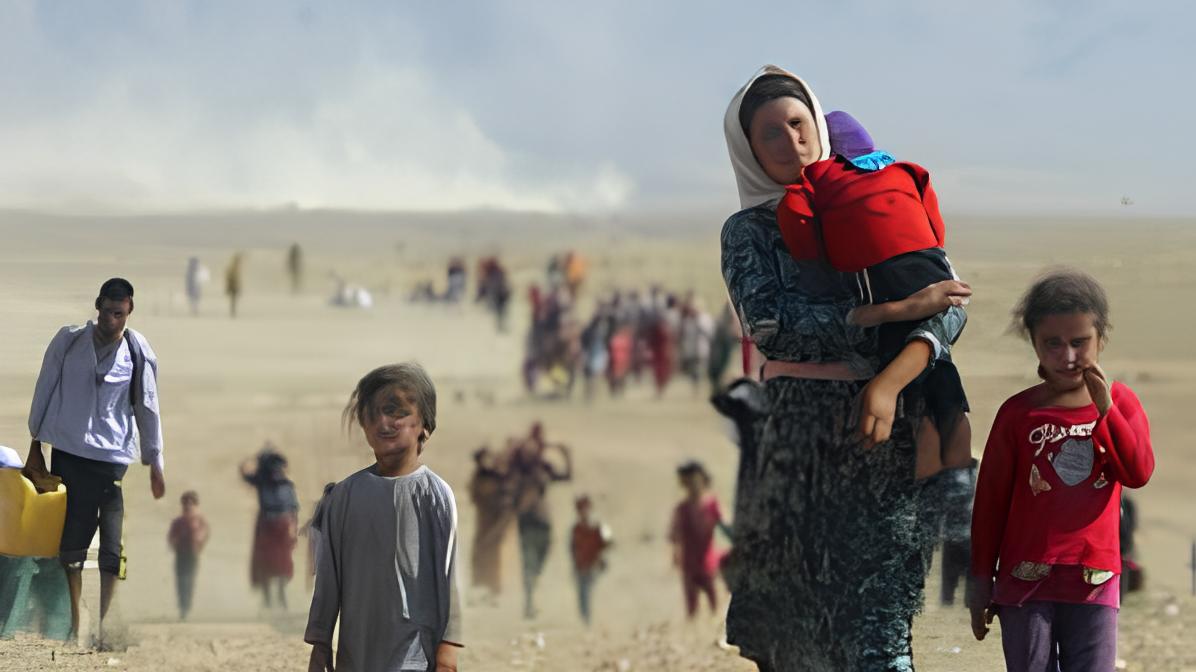
«On the night of 3 August 2014, IS terrorists raided Yazidi villages in northern Iraq in the Sinjar region. The aim of the IS terrorists was to wipe out the Yazidi community as far as possible. An estimated 5,000 to 10,000 people were murdered and tens of thousands fled. Men and adolescent boys were killed immediately. Elderly men and women were also killed immediately. Women and girls were abducted, enslaved, sold, tortured and raped. Young boys were used as child soldiers, and the IS terrorists attempted to indoctrinate them with IS ideology. Some Yazidis fled to the Sinjar Mountains in the heat of midsummer. Many died of hunger and thirst. Others were shot whilst fleeing, as IS terrorists pursued them in cars. Between 2,500 and 2,800 Yazidis are still missing and being sought. The situation for the Yazidis in the Middle East has now calmed down, as the IS terrorists have been pushed back significantly by Kurdish fighters and the US. However, there is still a risk that new conflicts, persecution and killings may occur in the future.
Some Yazidi families are returning to Iraq, but their safety and protection are not guaranteed. The Yazidis who have fled must integrate into their new countries, work there, attend school, continue their education, learn the language and familiarise themselves with the new culture. At the same time, many Yazidis who have fled must live with the trauma, as trauma counselling is very difficult in their new countries due to the refugees’ lack of language skills, the unfamiliarity of psychologists with Yazidi culture, and the far-reaching and profound nature of the trauma. For many Yazidis and their families, a return to their regions of origin is impossible. They are stateless and must rebuild their lives in other countries».
Read also:
- Reconstructing Yazidis’ genocide and systematic discrimination through art: a talk with the Yazidi refugee artist Holya Khalaf
- Nine years later: the Yazidi cultural genocide and the risk to legal impunity
The violence perpetrated against the Yazidi community – including killings, forced conversions, displacement and enslavement – reflects a systematic strategy aimed at destroying the group. In what ways does this combination of practices affect not only the group’s physical integrity, but also its social and cultural continuity?
«For the Yazidis, the violence and persecution are a sign that they are being marginalised, discriminated against and dehumanised. They feel robbed of their human dignity.
They also feel that they are not being heard, seen or protected by other countries and institutions. Yazidis can no longer return to their villages, as they would still face discrimination, marginalisation and violence. Yazidis in the Middle East would still have to hide their identity out of fear. The cohesion of the Yazidi community, as well as the preservation of their culture and religion, are also at risk, because in the past the Yazidis used to live together, which meant that their religion, culture, traditions and customs could be preserved. But now the Yazidis, and even individual families, live far apart. In other countries, the cohesion of the Yazidi community remains strong, but is no longer as intense as it once was. Yazidi victims are severely traumatised. Healing is difficult and requires a great deal of time and patience. Some emotional scars will likely never heal. Yazidi women who have been raped feel robbed of their honour and pride, their self-worth, their femininity and their own bodies. Normally, Yazidis who are married to people of other religions are excommunicated from the faith. This caused a major conflict within the Yazidi community. However, following a lengthy debate within the community, the Yazidi women were readmitted by the Yazidi clergy. A further problem is that the rapes have resulted in children being fathered by the perpetrators. The Yazidi women who managed to free themselves from slavery and return to their families had to leave their children behind, as under Islamic law they are Muslim children and belong to their fathers. The Yazidi community was also unwilling to take in the perpetrators’ children. Yazidis who were abducted for several years and were forced to forget their Yazidi culture and Kurdish language now face the challenge of reintegrating into their families and the Yazidi community».
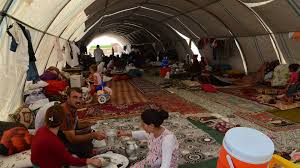
Between the impossibility of return, conditions in displacement camps and growing hostility towards refugees, Yazidi communities face a situation of deep vulnerability. What are the main obstacles today, and what is still missing at the political and institutional level to ensure real protection and a sustainable future?
«Today, the situation for the Yazidis in the refugee camps is very uncertain. They have been living in refugee camps for years and have no prospects for the future. Children do not go to school, and young adults are neither in vocational training nor studying at university. Adults do not go to work. There is little electricity, hardly any food and hardly any water in the camps.
The situation in the refugee camps must improve. In some camps, the Yazidis are living alongside potential perpetrators and the perpetrators’ families. Human rights organisations must do more to help and protect these people, and provide them with sufficient food and water as well as proper medical care. Children and young people must be given access to education, and adults should be better supported. Yazidis should be housed together in their own refugee camps and guarded by military or security personnel to better protect them from further attacks and discrimination. The refugee tents are also poorly equipped and offer no protection against bad weather. The Iraqi government should recognise its responsibility to protect the Yazidis, as the victims of the genocide were Iraqi citizens. Even Yazidis who have fled to Europe, for example, do not have secure residency status. Refugee status is not granted to all Yazidis. Although the German Bundestag recognised the genocide against the Yazidis on 19 January 2023, the new German government is nevertheless sending some Yazidis back to Iraq or Syria after many years, even though it is well aware that the Yazidis remain a highly vulnerable people. Other countries and institutions must do more to protect minorities such as the Yazidis by ensuring their full integration. There should be opportunities to attend language courses and gain access to schools, training centres, university places and jobs in the labour market. There should also be the possibility for the Yazidis to obtain citizenship in their new countries following a long stay and proof of integration. To this end, new laws must also be enacted to better protect the Yazidis. If the Yazidis are to be deported back to their countries of origin, then governments and institutions must ensure that the infrastructure is rebuilt. The land should be cleared of mines; people need homes, access to electricity, water, food, education, work, good healthcare, and social and political participation. New and better laws should also be enacted in Iraq to provide better protection for minorities such as the Yazidis».
In recent years, some national courts have prosecuted ISIS members for crimes against the Yazidi community, yet these cases remain limited and are often not perceived as justice by survivors. In your view, what are the main gaps in the accountability system, and where does this lack of trust stem from?
«In my view, the most significant gaps in the accountability system lie, first and foremost, in the limited scope of criminal prosecutions. Whilst some national courts have convicted IS members for crimes against the Yazidi community, many proceedings concern only individual perpetrators and often fail to address the full extent of the crimes committed, in particular genocide, sexual violence and systematic enslavement. Furthermore, international criminal justice is highly fragmented. Not all states have the legal, political or practical capacity to conduct such proceedings consistently. Many perpetrators remain beyond the reach of justice or have been charged solely with terrorism offences rather than core international crimes such as genocide or crimes against humanity. In my view, the lack of trust among many survivors also stems from the fact that legal proceedings alone are often not perceived as a sufficient form of justice. Many victims seek not only punishment, but also recognition of their suffering, societal reckoning, compensation, long-term support and an official historical truth. Furthermore, many survivors experience a great disconnect between their own experiences and the often slow, technical and bureaucratic legal processes. When proceedings take years, perpetrators are only partially held to account, or survivors do not feel sufficiently involved, it is easy to get the impression that the system is symbolic rather than truly just. Finally, the political dimension also plays a role. Many survivors perceive international responses to mass violence as selective and dependent on geopolitical interests. This creates the feeling that justice is not universal, but unevenly distributed».
In what ways does the erosion of cultural identity concretely affect the daily lives and social fabric of Yazidi communities today, particularly among younger generations?
«The erosion of cultural identity has a very tangible impact on the daily lives of the Yazidi community, particularly on younger generations. A key aspect is the loss of language, religious practices and traditional forms of knowledge that have been passed down through the generations. When these elements are disrupted, a generational gap emerges that can weaken the sense of belonging. Many young people also grow up in the diaspora or in unstable living situations, which can limit their direct access to cultural and religious sites, rituals and community structures. This also alters the way in which identity is experienced and lived. At the same time, the loss of cultural points of reference often leads to greater social fragmentation. Traditional community structures, which once provided orientation and cohesion, are weakened by displacement and migration. For many young Yazidis, the question of identity therefore arises in a very complex way, namely between integration into new and modern societies and the desire to preserve their own cultural and religious identity. Some Yazidis, particularly young Yazidis, are experiencing an identity crisis in the diaspora. Yet more and more are rediscovering their roots and wish to learn more about their culture and religion. They want to combine both worlds – the customs and traditions of the Western countries in which they grew up with Kurdish culture and the Yazidi religion. However, an increasing number of young Yazidis also wish to campaign for the modernisation of the Yazidi religion, as many religious and cultural customs and rules are outdated and do not fit with the modern age. Many young Yazidis are significantly better educated than older generations and place greater value on careers and individual goals; consequently, close contact with the extended family, early marriage and starting a family at a young age are increasingly taking a back seat. Overall, cultural erosion has meant not only the loss of traditions, but also a shift in social cohesion, a sense of belonging and self-identity within the community».
In your work, you propose the adoption of a General Comment on the social rights of minorities. Could you briefly explain what this entails and which gaps in the current legal framework it aims to address?
«A General Comment is an interpretive guide issued by a UN human rights committee that clarifies existing obligations under international law. It does not create new law, but rather explains how existing treaty provisions – in this case, regarding the social rights of minorities – should be understood and applied. The idea behind a General Comment on the social rights of minorities is to highlight the challenges ethnic and religious minorities face in exercising their social rights – that is, the various forms of specific discrimination in the areas of health care and education, food and housing provision, and social protection – using typical cases to illustrate these issues and, with the help of best-practice examples, to assist states in identifying these problems and developing adequate political and legal solutions. While rules under international law already exist that guarantee protection against discrimination, in practice the specific protection of the social rights of minorities often remains unclear or insufficiently developed. The new General Comment, which would need to be drafted by the Committee on Economic, Social and Cultural Rights, would provide recommendations to states on how they can most effectively address these issues affecting minorities living in their countries through their legislative and administrative practices.
As someone of Yazidi origin, what personal and emotional challenges have you faced in studying and addressing the genocide of your own community?
«At first, I found it difficult to maintain a sense of detachment from the subject, as I am a Yazidi myself. I have always tried to approach my research and investigations with the utmost neutrality. But I have repeatedly found that the subject affects me deeply, as my ancestors, too, were forced to flee time and again due to persecution. We Yazidis therefore carry a transgenerational trauma. Yet the more I delved into the subject, the more I wanted to give a voice to those affected and draw attention to the Yazidis and the genocide against them, not just nationally but also internationally.
As I was born and raised in Germany and have no family members or relatives who were victims of the genocide, I was fortunately able to work more rationally. But whilst researching, I often found myself thinking that I too could have been one of the victims. I too could have grown up in a war zone and experienced how women can be enslaved, raped and tortured. However, I am very fortunate to have been born and raised in a peaceful and democratic country like Germany, where great importance is attached to human rights and equality. As a Yazidi, I was deeply disturbed by the visual material. All the reports and accounts of IS’s crimes were very harrowing. What the victims described was also deeply shocking. I also listened to videos and texts by IS terrorists. Their ideology and way of thinking were truly terrifying. It was also terrible for me, as a young Yazidi woman, to see how inhumanely they treat Yazidi women and women in general. The abuse of children was also hard to bear. But as a law student, a future lawyer and a project assistant in international law, I feel a responsibility to report on my own people too, because if I don’t, then hardly anyone else will. Unfortunately, the protection of minorities is often overlooked in both the legal and political spheres and, sadly, is sometimes not taken seriously – as I have already experienced on one or two occasions. However, I am happy to stand up for all minorities, and even then I am constantly struck by the injustices and crimes that exist in this world. I am repeatedly moved emotionally – regardless of which people are involved. But for me, that is part of the job. You can work as a scientist in a neutral and competent manner, whilst at the same time allowing your emotions space when thinking and researching. Ultimately, we are all human beings and should not lose our humanity. This is precisely what I incorporate into my work, because it allows you to process things better and to pursue your work with intensity and passion».
From a research perspective, what are the main challenges in accurately documenting the testimonies of Yazidi genocide survivors?
«From an academic perspective, it was not always easy to watch and listen to interviews with those affected. One could clearly sense their pain and suffering. When examining the victims’ accounts, one must also question whether the timelines, the order of certain narratives and other details are accurate, as those affected are severely traumatised and recount everything from a distorted perspective. I also do not know to what extent the victims were able to open up emotionally to the reporters. I can imagine that the Yazidis, particularly the women who suffered severe sexual abuse, are afraid to open up to strangers and, consequently, to academics, journalists, politicians and institutions. Perhaps they were unable to speak about certain things, particularly when it came to sexual abuse, which remains a very strong taboo in many cultures. But in order to better come to terms with the consequences of the genocide and to prosecute it more effectively, everything that happened to the victims should be recounted. The victims may also only speak Kurdish and Arabic. I hope that the translations during the interviews were also accurate. Furthermore, the interviews and reports should be translated into various languages so that the genocide against the Yazidis becomes better known and so that more people know who the Yazidis are. Topics such as sexual violence against women and children in war could also be better addressed and destigmatised. For me, it wasn’t difficult to find a lot of material, as there is quite a lot available in German, Kurdish and English. But for researchers from other countries who do not speak these three languages, it would probably also be helpful and interesting if there were sufficient material on the Yazidis and the genocide against them in their own languages. As a researcher in this field, it is not always easy for me either to document the genocide in a way that is neutral, academic and serious, whilst ensuring that those affected still feel seen, heard, valued, recognised, respected and taken seriously. For researchers bear the ethical responsibility to document these testimonies with dignity and particular care».
Looking to the future, what are the most urgent priorities for the reconstruction of the Yazidi community, both socially and culturally?
«In my view, the reconstruction of the Yazidi community must go far beyond the physical rebuilding of destroyed regions. One of the most urgent priorities is, first and foremost, security. Many survivors cannot return permanently as long as they continue to feel threatened or politically insecure. Furthermore, psychological and social support plays a central role. Many people are still living with severe trauma, the loss of loved ones and the consequences of displacement and violence. Long-term psychosocial care and educational opportunities are therefore essential. Culturally, it is particularly important to protect and strengthen the religious and cultural identity of the Yazidi community. The genocide was directed not only against individual people, but also against collective memory, traditions and cultural heritage. That is why the preservation of Yazidi culture, language, religious practices and historical memories is crucial for long-term reconstruction. Equally important is the political and social participation of the Yazidi community. Many survivors desire not only humanitarian aid, but also genuine representation, recognition and a say in political decisions affecting their future. A permanent right of residence and integration in other countries should also be possible for Yazidis who have fled. Ultimately, reconstruction means not only rebuilding destroyed places, but also restoring trust, dignity and social cohesion».
Photo: Yazidis fleeing