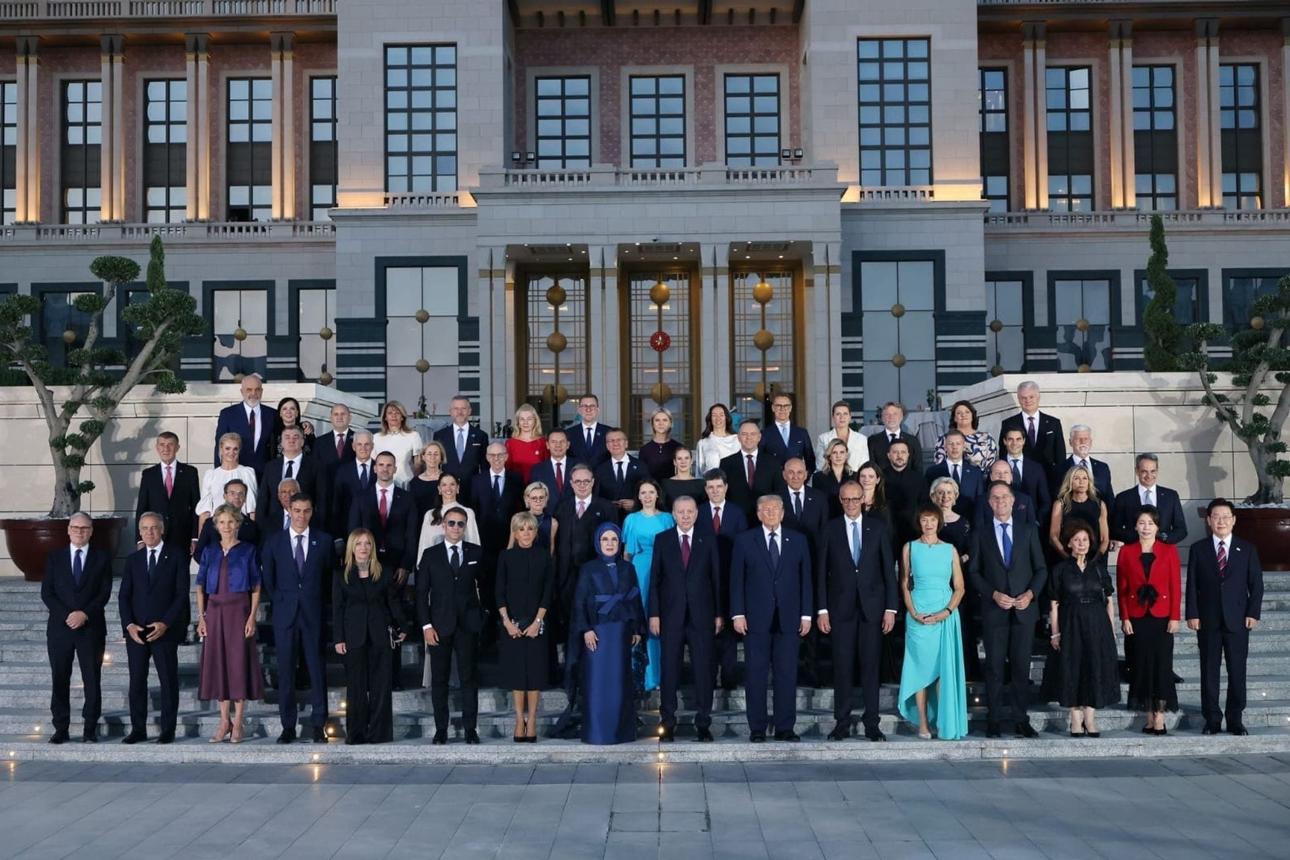
The NATO Ankara Summit convened amidst pervasive uncertainties and geopolitical contestations. Hosting the summit after a 24-year hiatus, Turkey’s successful execution of the event without any organizational or logistical impediments constituted a significant institutional achievement. While the 2004 Istanbul Summit was dominated by the strategic ramifications of the Iraq and Afghanistan conflicts, the contemporary allied agenda was prominently occupied by the challenges posed by Iran and Russia.
ECEM TOPLAR – International relations analyst
NATO’s imperative for structural revision, coupled with the conventional and asymmetric warfare threats it confronts, forms the core research questions currently addressed by the 32 alliance members. The post-Cold War decline in European defense industrial capacity, exacerbated by the acute depletion of ammunition stockpiles during the Russia-Ukraine war, renders the expansion of manufacturing capabilities a strategic necessity.
This condition begs the critical question: Can sustainability in defense production capacity be maintained to ensure effective deterrence?
Precisely at this juncture, an implicit paradigm emerges: NATO 3.0. This conceptualization can be operationalized as a transition “from rhetorical commitment to actionable execution.”
French President Emmanuel Macron’s 2019 assertion that NATO was experiencing “brain death” constituted a historical fracture point. Although a concrete roadmap for the institutionalization of a “European Army” was initiated during this period, France’s EU Council presidency was disrupted by the onset of the COVID-19 pandemic. Consequently, fundamental debates regarding the operational standards, doctrinal principles, command language, troop contributions, member state composition, and industrial structures of a European army were suspended prior to any formal institutionalization. In the words of Europe’s primary actors, the continent was “caught unprepared for the second Trump administration.” Donald Trump’s recurrent signals indicating a potential US withdrawal from the alliance further elevated the strategic salience of the Ankara Summit. The participation of US President Donald Trump remained ambiguous until the final week. Indeed, even subsequent to the confirmation of his attendance, summit sessions were restricted to a single sitting to preempt potential diplomatic frictions. Concurrently, several chronic institutional challenges appear to have been deliberately omitted from the formal agenda. There was a pervasive systemic expectation that non-US allies would assume the vanguard in augmenting defense expenditures. The dissatisfaction articulated by the US administration regarding this matter necessitated concrete commitments in burden-sharing. The Ankara Summit evaluated the pledges formalized at the preceding Hague Summit. European allies and Canada demonstrated concerted efforts to showcase their increased financial burdens. To this end, the summit communiqué highlighted that Europe and Canada had collectively increased their defense expenditures by $139 billion in 2025.
Numerous initiatives and projects unveiled within the framework of the Defense Industry Forum, held concurrently with the summit, signify that NATO now positions the defense industry not merely as an “ancillary component,” but as an intrinsic element of its deterrence architecture. The emphasis on joint production, standardized NATO specifications, and procurement planning via multinational coalitions in new defense contracts exceeding $50 billion remains highly noteworthy.
Conversely, for President Trump—who has maintained a consistently critical stance toward NATO since assuming office—the summit transformed into an optimal venue for image restoration and prestige renewal.
Turkey as a Balancing Actor in the Russia-Ukraine Conflict
In addition to these contentious agenda items, Turkey’s strategic role and hosting performance warrant scholarly examination. Turkey finds itself navigating a complex geopolitical landscape, flanked by the conflict in Iran to its south and the Russia-Ukraine war to its north, the latter of which exerts a profound influence on all Black Sea littoral states. Prior to the leaders’ summit, Turkish Foreign Minister Hakan Fidan conducted high-level diplomatic consultations in Moscow, meeting with Russian President Vladimir Putin. During these encounters, Putin signaled a green light for the resumption of peace negotiations in Istanbul.
Concurrently, a forum of volunteers for Ukraine was convened during the summit. The final summit declaration underscored Russia’s long-term threat to Euro-Atlantic security and stability, while reaffirming the allies’ unwavering solidarity in defending Ukraine’s independence, sovereignty, and territorial integrity.
Immediately following the summit, ten European nations announced the establishment of an “Anti-Ballistic Missile Coalition” against the escalating threat of ballistic missiles. Whether this coalition signifies a commitment to prolonged warfare or a strategic exit strategy from the negotiation table remains a matter of academic debate. However, it is unequivocally clear that this initiative serves as a contingency plan for security guarantees independent of the United States.
Another critical post-summit development was Foreign Minister Fidan’s diplomatic visit to Kyiv. Throughout this visit, Turkey’s singular and primary focus remained the establishment of a sustainable peace. The diplomatic signals conveyed by Kyiv indicate that the negotiation table could be re-established in Turkey to facilitate prospective Russia-Ukraine peace talks.
Nevertheless, it is necessary to revisit the question posed in the preceding section: Was the Anti-Ballistic Missile Coalition, which includes Ukraine, established for peaceful settlement purposes, or is its primary objective strategic deterrence? This development will undoubtedly serve as an empirical sincerity test regarding commitment to peace.
The Iranian Conundrum
During a joint press conference with NATO Secretary General Mark Rutte, Donald Trump’s announcement that he had “halted the ceasefire reached with Iran” constituted a strategic message delivered from Ankara to Tehran—spanning a distance of two thousand kilometers. While it remains uncertain whether Trump secured the absolute backing of NATO regarding Iran, the mere inclusion of a distinct emphasis on Iran in the final declaration remains highly significant.
The Erdoğan-Trump Summit
A summit within a summit transpired as the bilateral meeting between Turkish President Recep Tayyip Erdoğan and US President Donald Trump overshadowed the main collective sessions. At the summit—where Trump remarkably remarked, “I would not have attended if it weren’t for Erdoğan”—the announcement that the CAATSA sanctions against Turkey would be lifted, and that the procurement of F-110 engines alongside the supply of F-35 fighter jets would be facilitated, represented a critical geopolitical breakthrough for Turkey. This development effectively resolved the diplomatic deadlock that had persisted since 2019.
The Strategic Symbolism of the Gifted Handgun
The widespread discourse surrounding the summit extended beyond its geopolitical outcomes to encompass elements closely intersecting the realms of fashion and public diplomacy. Notably, two female leaders commanded significant attention: Italian Prime Minister Giorgia Meloni and Icelandic Prime Minister Kristrún Frostadóttir. The diplomatic elegance and communication styles demonstrated by both leaders reinforced the growing significance of female leadership in global governance.
Note on Cultural Diplomacy
The handgun presented as an official gift by the Turkish host sparked considerable debate. The presentation of a “revolver” type firearm carries dual significance: it serves as an antique artifact reflecting traditional Turkish craftsmanship and symbolizes a strategic emphasis on the deterrence capabilities of the defense alliance.
Furthermore, the exhibition of Turkish cuisine emerged as a focal point, with European media coverage occasionally abandoning the final summit declaration to highlight this aspect. Turkey projected the multicultural and millennia-old historical heritage of its geography onto its culinary presentations, earning unanimous acclaim from the guests. The reception was so profound that the two-Michelin-starred Turkish chef received numerous professional offers from the attending world leaders.
Gestures Vested Upon First Spouses
Concurrently, the series of cultural programs organized by First Lady Emine Erdoğan for the spouses of world leaders featured meticulous details that underscored the efficacy of cultural diplomacy. While the guests were served elite selections from Turkish cuisine, traditional handicrafts reflecting Turkey’s deep-rooted cultural heritage were showcased. The program featured a performance by pop icon Ajda Pekkan alongside a fashion show by designer Ozgur Masur.
The personalized presentations curated for each spouse stood out among the sophisticated details of the evening. The hospitality extended by Emine Erdoğan—who has garnered international recognition for her leadership in the UN-backed Zero Waste project—received exemplary feedback from the attending first spouses.